
Let’s Be Honest About Figurative Language
Let’s be honest. Most of us have taught figurative language the same way at some point: definitions on a poster, a few examples, maybe a worksheet where students identify similes, metaphors or personification.
... and on the surface, it looks like learning is happening. Students can label the figurative language device. They can match the definition. They can even find examples in a text.
But can students actually see what is being created in the reader's mind at a result?
Teaching figurative language is multifaceted: drafting, writing, comprehending and visualising - all to create meaning and engage the reader.
It’s about helping the reader form a picture in their mind. And this is where so many traditional figurative language posters fall short. They tell students what figurative language is, but they don’t show them what it does.
Click here to explore the figurative language bundle: posters and student activity.

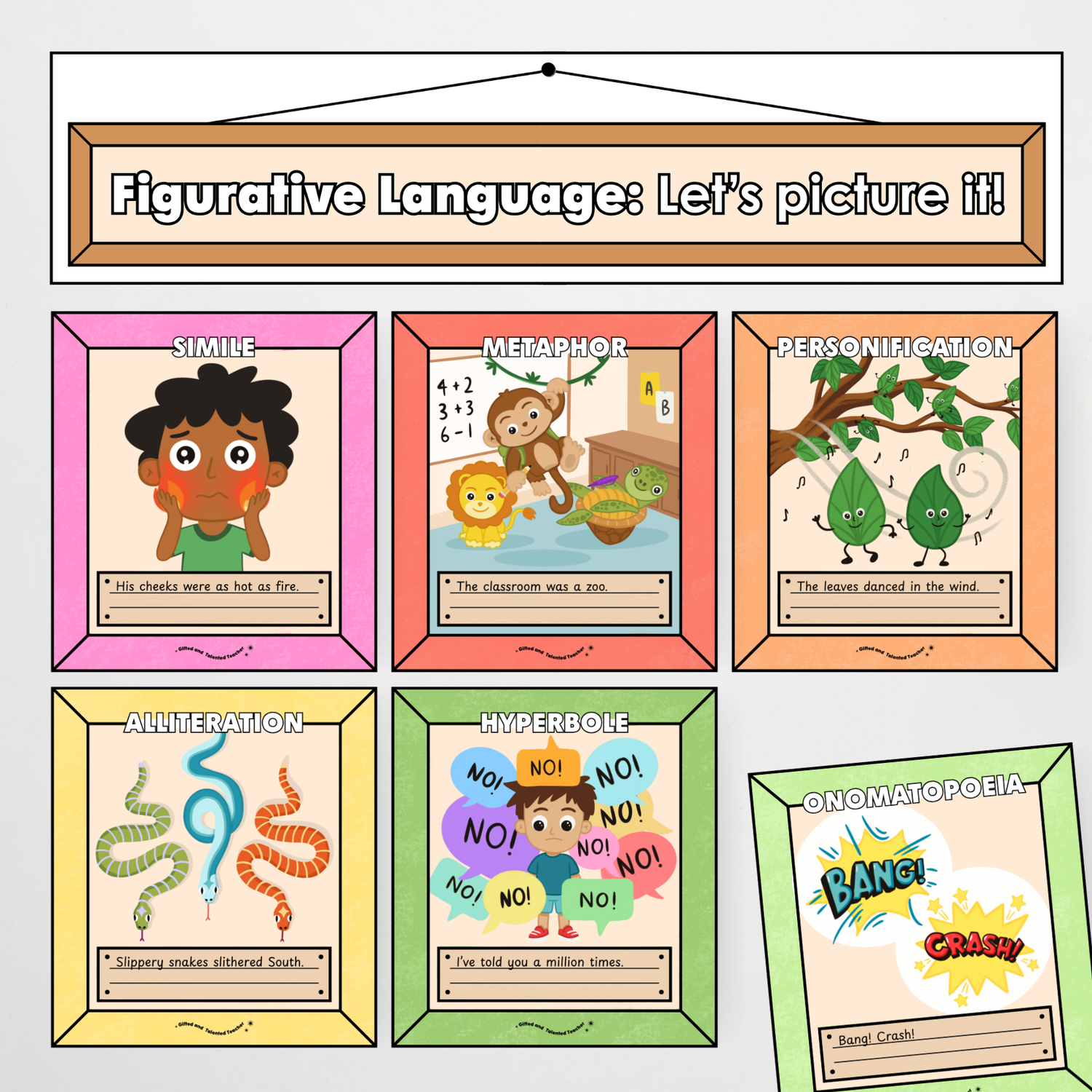
Featured: Figurative Language Posters specifically demonstrating visuals to match written text, giving students the opportunity to comprehend and establish a universal idea of what the author is trying to achieve.
Questioning should shift after you ask students “Can you identify the metaphor?” to something much more powerful:
- What do you see?
- What image has been created in your mind?
Let's Dive In: How to Best Teach Figurative Language
If you’ve ever searched how to best teach figurative language?, the answer isn’t more definitions or more worksheets. It’s about shifting the focus of instruction.
Teacher tip: instead of moving straight to identification, move through a more intentional sequence:
- model what figurative language looks like
- build understanding together
- give students the opportunity to apply it independently
Teacher tip: co-construct classroom posters to establish universal ideas of how figurative language is designed to create a visual in the reader's mind.

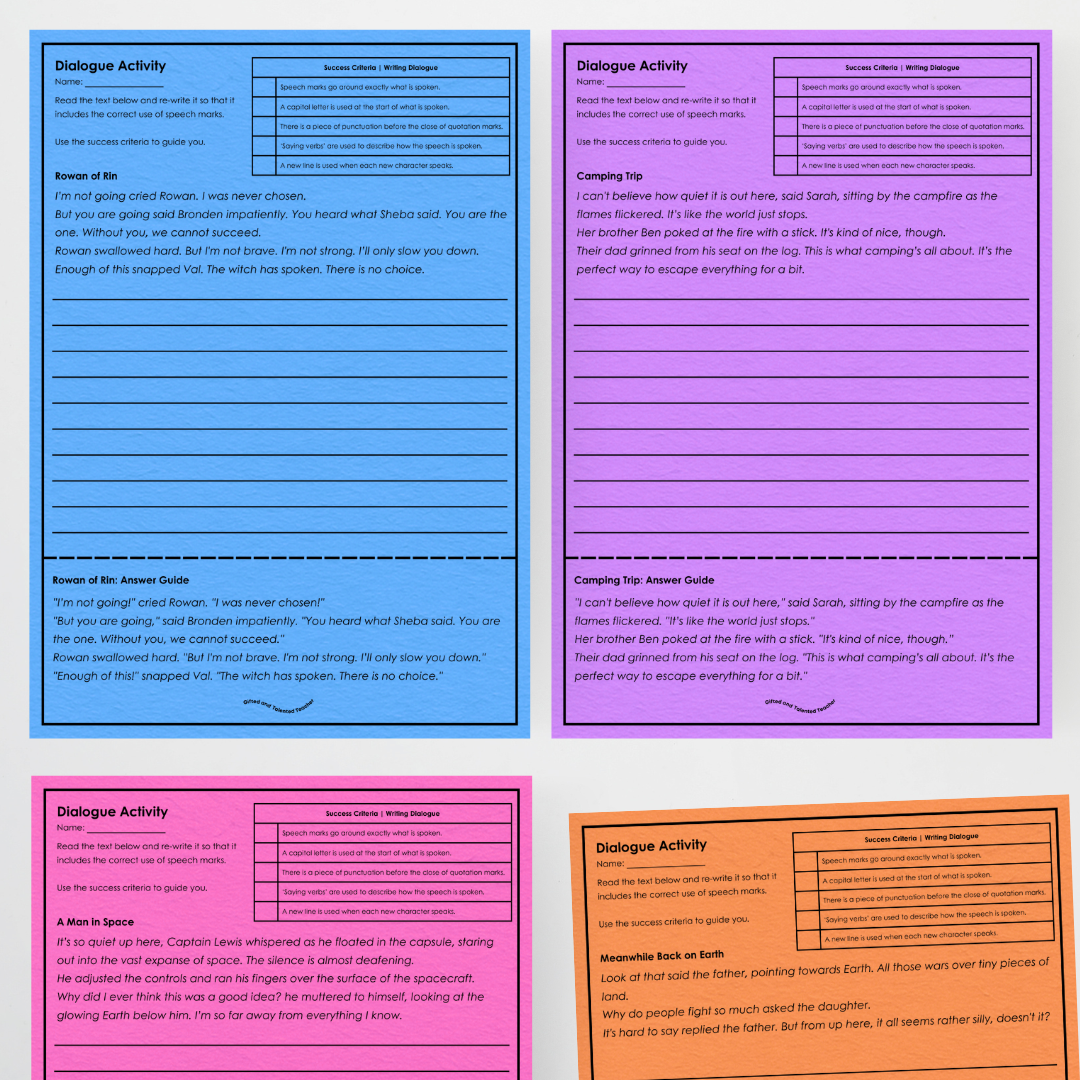
Featured: Figurative Language Classroom Activity specifically designed to give students the opportunity to write, comprehend and visualise figurative language.
A Different Approach to Figurative Language Posters
The Figurative Language: Let’s Picture It wall display is the first of its kind.
Rather than relying on text-heavy definitions alone, this teacher resource makes thinking visible.
The poster set helps students connect words on the page to the images in the reader's mind, supporting both comprehension and application.
This Figurative Language poster set recognises that students need different levels of support at different stages of learning, which is why the bundle includes four versions of the same content each with a distinct purpose.
What’s included in this figurative language bundle?
1. Illustrated + Written Wall Display
18 figurative language posters featuring clear definitions and visual representations to support comprehension and application.
2. Illustrated (No Text) Co-construction Display
18 visual prompts without definitions, designed to spark discussion and support students to co-construct meaning as a class.
3. Black & White (Text + Draw) Version
Text-only templates where students interpret figurative language and create their own visual representations.
4. Blank Creation Templates (No Text, No Imagery)
Open-ended templates for students to generate their own figurative language or respond to teacher-provided examples.
Figurative language included: simile, metaphor, personification, alliteration, hyperbole, onomatopoeia, idiom, imagery, euphemism, pun, symbolism, adage, allusion, assonance, consonance, oxymoron, proverb

Rethinking Your Figurative Language Wall Display
A figurative language bulletin board has the potential to be one of the most powerful teaching tools in your classroom — but only if it specifically calls out and visually demonstrates exactly what it is that figurative language is achieving.
Instead of displaying everything at once, consider building your wall over time as you introduce each concept. Refer back to it during reading lessons. Use it as a prompt during writing tasks. Encourage students to add to it, question it and interact with it.
When your wall display is connected to your teaching, it becomes more than just a visual. It becomes part of the learning process.
The Shift That Changes Everything
At its core, teaching figurative language well isn’t only about teaching students to identify features. It’s about helping them understand meaning.
And that begins with a simple, powerful shift in questioning.
Instead of asking, “What technique is this?”
we ask, “What do you see?”
Because once students can see it, they can understand it.
And once they understand it, they can start to create it for themselves.


Leave a comment
This site is protected by hCaptcha and the hCaptcha Privacy Policy and Terms of Service apply.