
Neurodiverse Classroom Resources for an Inclusive School: Activities, Displays and Printables for Real Classrooms
Creating an inclusive classroom isn’t about adding one poster or running a single lesson during Neurodiversity Celebration Week or Autism Awareness Month. It’s about building a space where every student can see themselves, understand others, and feel like they belong — every day.
If you’re searching for neurodiversity classroom resources, inclusive classroom activities, or engaging student tasks that go beyond surface-level awareness, this guide brings together meaningful, classroom-ready ideas you can implement immediately.
Click here to jump straight to hands on, engaging and research-based classroom resources that support neurodiversity in the classroom.

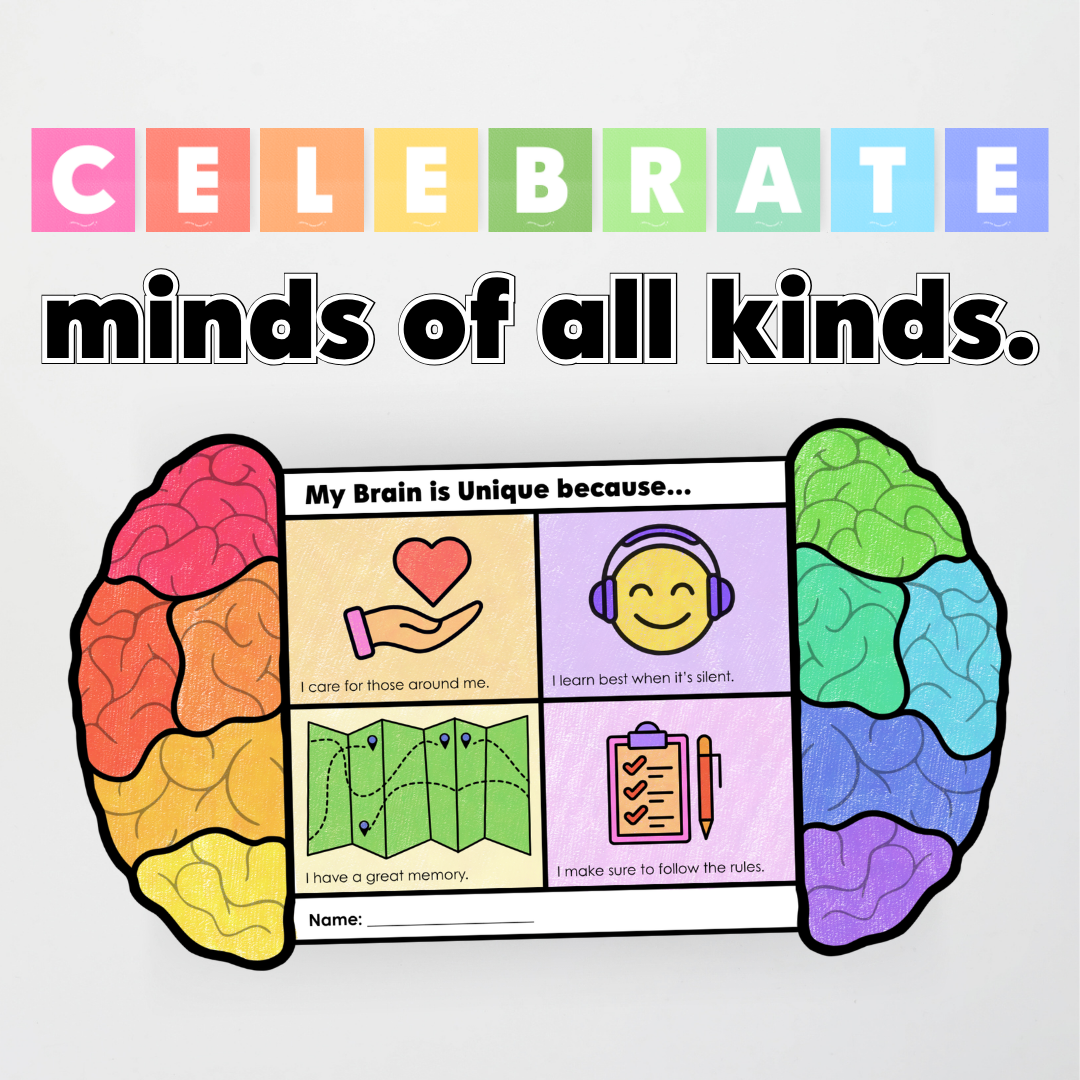
Featured: My Unique Brain Classroom Banner and Lettering
What Does a Neurodiverse Classroom Actually Look Like?
A neurodiverse classroom recognises that students think, learn, focus, communicate, and process information in different ways. These differences are not deficits — they are natural variations.
In practice, this means:
- Multiple ways to access learning (visual, verbal, hands-on)
- Opportunities for student voice and choice
- Clear, predictable environments
- Representation through displays, language, and activities
This is where intentional resources matter—especially those that are hands-on, visual, and student-driven.
1. Hands-On Student Activity: Our Unique Brain
One of the most powerful ways to build understanding is to make thinking visible.
Our Unique Brain is a cut-and-paste visual activity where students:
- Explore a range of visual tiles representing thinking styles, preferences, and ways of learning
- Select tiles that reflect how their brain works
- Colour, cut, and assemble their own “brain”

Featured: My Unique Brain Hands On Craft Activity
Why this works
- It removes labels and focuses on self-understanding
- It’s hands-on and engaging, ideal for all learners
- It creates a visual representation that sparks discussion
In the classroom
Use this as a launch activity for Neurodiversity Celebration Week, a reflective task during Autism Awareness Month or starting point for conversations about how we all learn differently.
2. Inclusive Wall Display: Our Neurodiverse Classroom
A strong wall display can shift classroom culture when it’s meaningful—not just decorative.
Our Neurodiverse Classroom display compares brains to flowers that grow differently depending on their environment.

Featured: My Neurodiverse Classroom - Neurodiversity Wall Display
Instead of saying “some students struggle at certain times,” it reframes learning as:
- Different growth patterns
- Different needs to thrive
- Different strengths
Why this works
- It’s visually accessible for all ages
- It builds a shared language around inclusion
- It reinforces that difference is expected, not exceptional
In the classroom
Use this display to anchor discussions about learning differences, refer back to when supporting behaviour, effort, or collaboration or create a consistent message: we all grow differently, and that’s okay.
3. Open-Ended Reflection: My Brain is Unique Because…
This is where student voice comes in.
My Brain is Unique Because… is a printable student activity that invites learners to:
- Write, draw, or colour how their brain works best
- Reflect on their strengths, preferences, and needs

Featured: My Unique Brain Classroom Activity and Wall Display
Why this works
- It’s low-barrier and accessible for all learners
- It allows for differentiation without stigma
- It centres identity and self-awareness
In the classroom
Use this task alongside the brain activity for deeper reflection, as a quiet writing or art task or as part of a classroom display or portfolio.
Why These Resources Matter for Inclusive Schools
When teachers search for:
- inclusive classroom resources
- neurodivergent student activities
- hands-on learning tasks
- classroom printables for inclusion
They’re not just looking for activities—they’re looking for tools that build understanding (not just awareness), engage all learners and fit into real classroom time.
These resources from Gifted and Talented Teacher are designed with that in mind:
- Practical (ready to print and use)
- Engaging (cut, colour, build, reflect)
- Meaningful (student-centred, not tokenistic)
When to Use Neurodiversity Resources
These activities are ideal for Neurodiversity Celebration Week, Autism Awareness Month, beginning-of-year community building, social and emotional learning blocks, inclusive classroom planning and all year round reflection and discussion.
Because most importantly — they shouldn’t be limited to one week.
An inclusive classroom isn’t created in a single lesson. It’s built through the language we use, the experiences we design and the way we represent difference.


Leave a comment
This site is protected by hCaptcha and the hCaptcha Privacy Policy and Terms of Service apply.